Orbit
Four focused software products for small teams and owner-run businesses — social publishing, notes in context, a multi-company CRM and Google Ads without an agency.
- Role
- Founder, Product, Design, Development
- Markets
- International
- Status
- active
Why Orbit
Small businesses run on a dozen tools that don’t know about each other.
Orbit is the opposite of one large suite: four products, each doing one job properly — publishing social media for several brands, keeping notes and decisions in context, running customer relationships across companies, and managing Google Ads without an agency.
They share one design and pass information to each other: conversations from Cue and customers from Thread end up in Orbit CRM. I design, build and run them — product, interface, code and the business around them.
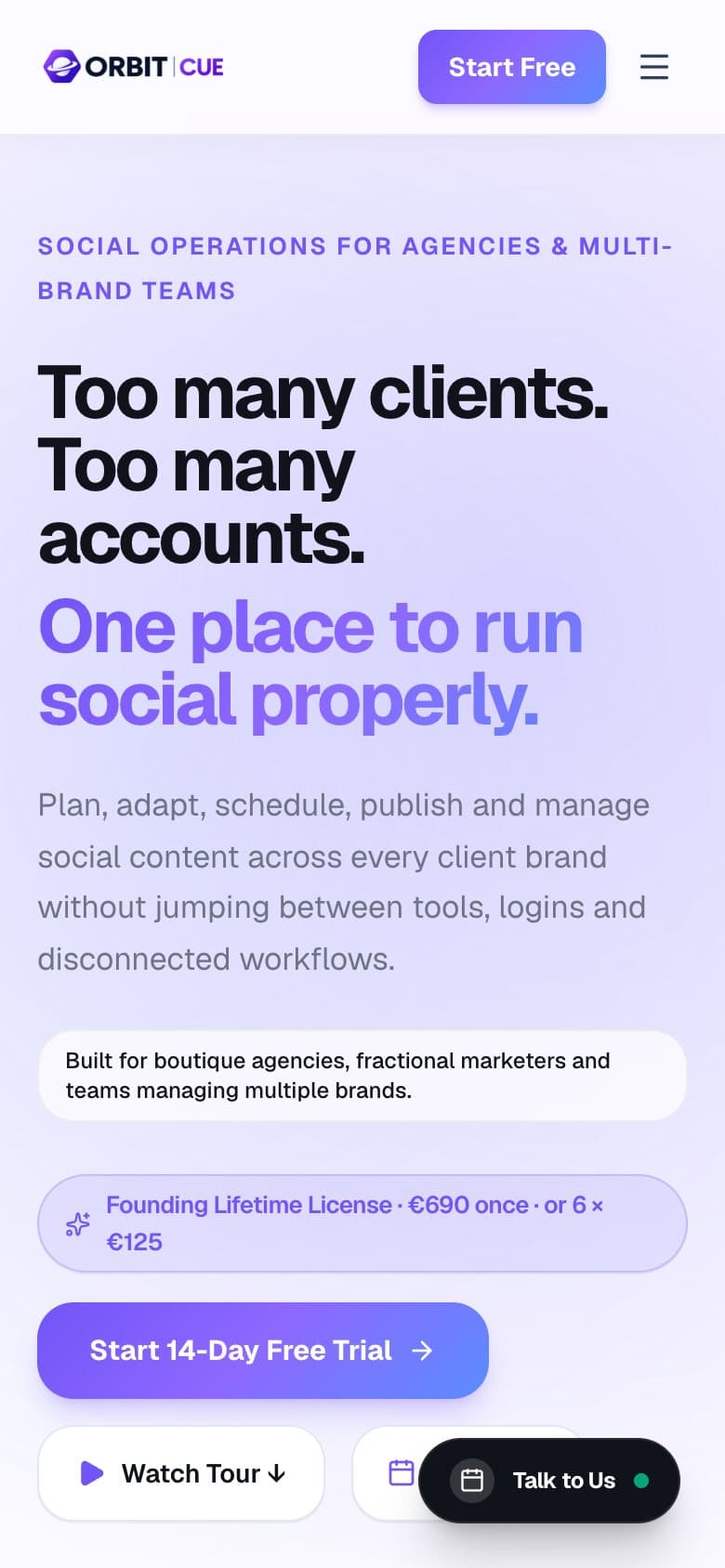
Orbit Cue
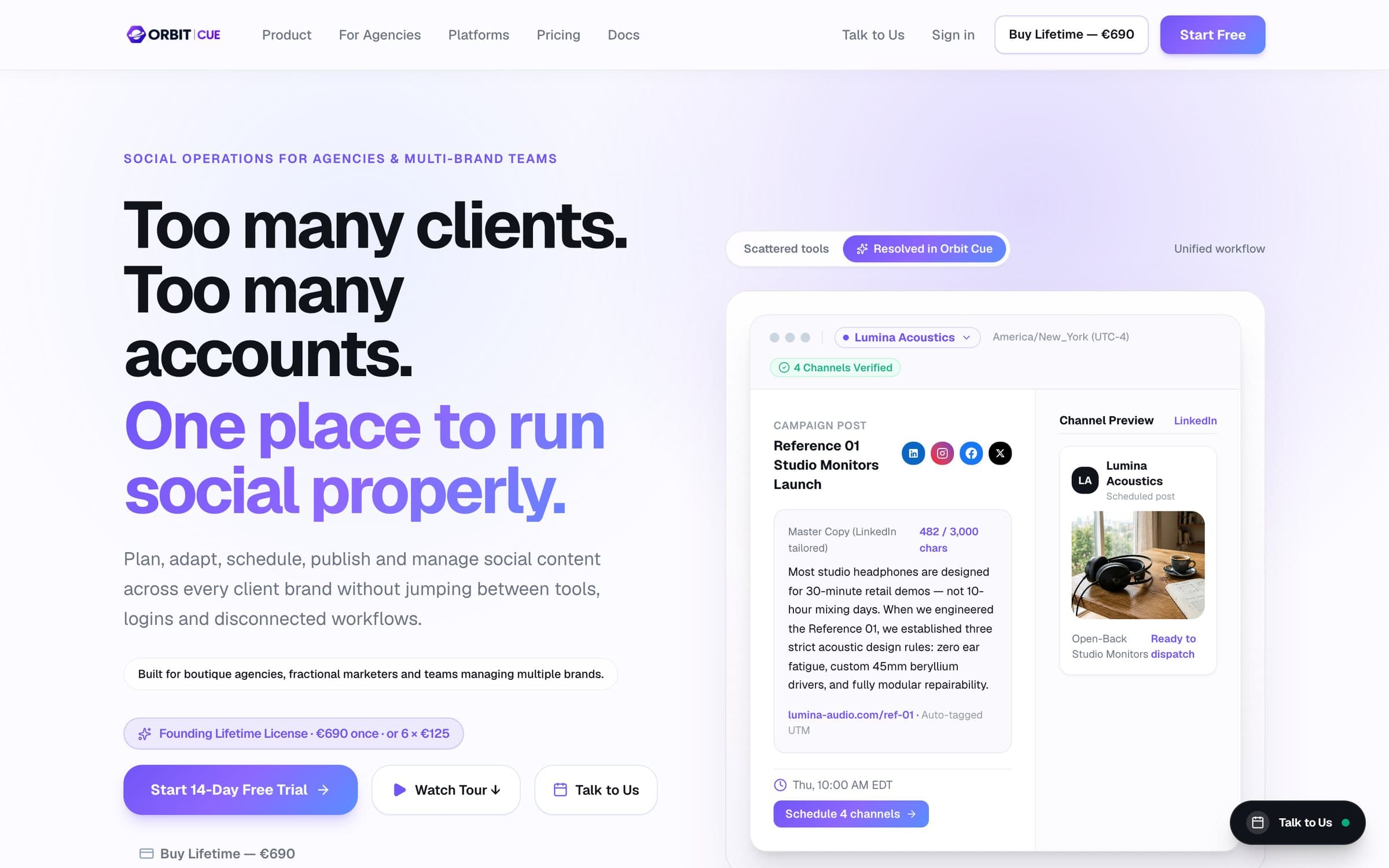
Social publishing for people who run several brands.
The problem
Agencies and marketers who look after several brands juggle a login per network, a calendar per client and a spreadsheet per month. Posts go out at the wrong local time, in the wrong format, or not at all.
How it works
- One workspace for any number of brands, each with its own channels, media library, tone and time zone.
- Write a post once, adapt it for each network, and see a live preview of how it will look there.
- Schedule in the brand’s own local time. A background worker publishes through the official APIs of Facebook, Instagram, LinkedIn, X, TikTok, Pinterest, YouTube and Google Business Profile.
- Where a network offers no API for an account, one click hands the finished post to that network’s own composer.
- Import a whole editorial plan from Excel or CSV, plan it on a calendar, and read comments and messages in one inbox — the ones that matter go straight to Orbit CRM.
AI help with captions and replies is optional and runs on your own model or key.
Orbit Thread
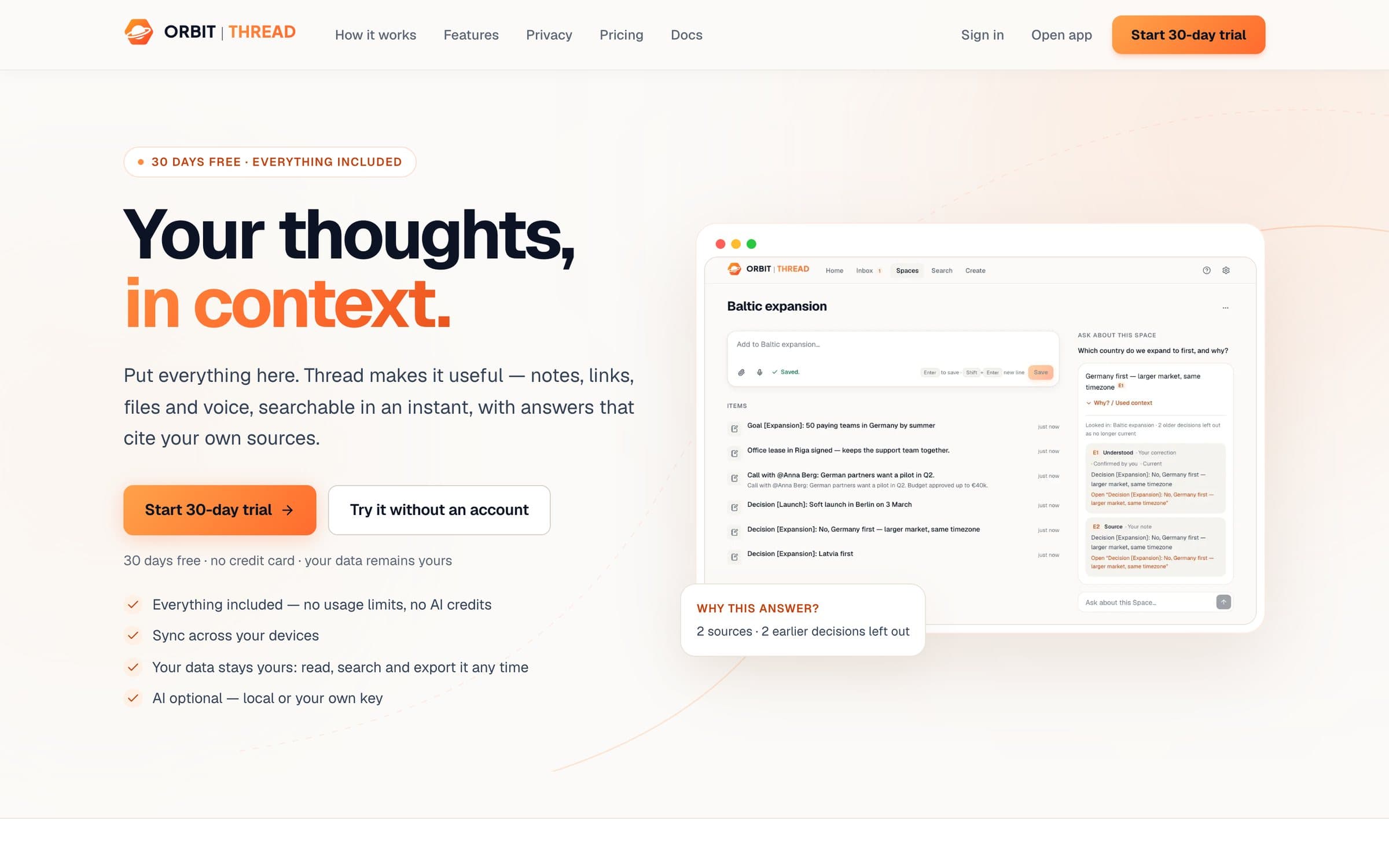
Your thoughts, in context.
The problem
Notes, links, files and voice memos end up spread across five apps. When you need to know what was decided about a client three months ago, you search everywhere and trust nothing you find.
How it works
- Put anything in — text, links, files, images, audio — without deciding first where it belongs.
- Everything is saved on your own device before anything else happens. Thread works offline, and you can start without creating an account.
- Group things into Spaces — a client, a project, an area of life — and Thread keeps a current picture of each: what is decided, what is open, what has changed.
- Your originals are never rewritten. Ask a question and the answer points to your own notes as its sources — or Thread says plainly that it doesn’t know.
- AI is optional: run it on your own computer or bring your own key. Everything can be exported in one file.
Orbit CRM
One CRM for several companies.
The problem
Running more than one company means leads arrive through websites, social media, product sign-ups and newsletters — for different businesses, and sometimes for the same person.
How it works
- One login, a separate workspace for each company, and contacts that can belong to more than one of them.
- Each company has its own pipelines and stages, so a studio enquiry and a product customer are never mixed up.
- Leads arrive on their own: website contact forms, newsletter sign-ups, conversations from Orbit Cue, and customer events from Orbit Thread such as trials and cancellations.
- A “Due today” view lists the calls, tasks and replies that need attention.
- Email outreach with templates and a suppression list, spreadsheet import, and roles for admins, editors and viewers.
- Website contact formsenquiries from company websites
- Newsletter sign-upsnew subscribers become contacts
- Orbit Cuecomments, messages and demo bookings
- Orbit Threadsign-ups, trials, subscriptions, cancellations
- One workspace per company
- Pipelines and stages
- Due today: calls, tasks, replies
- Outreach with templates
Orbit Grow
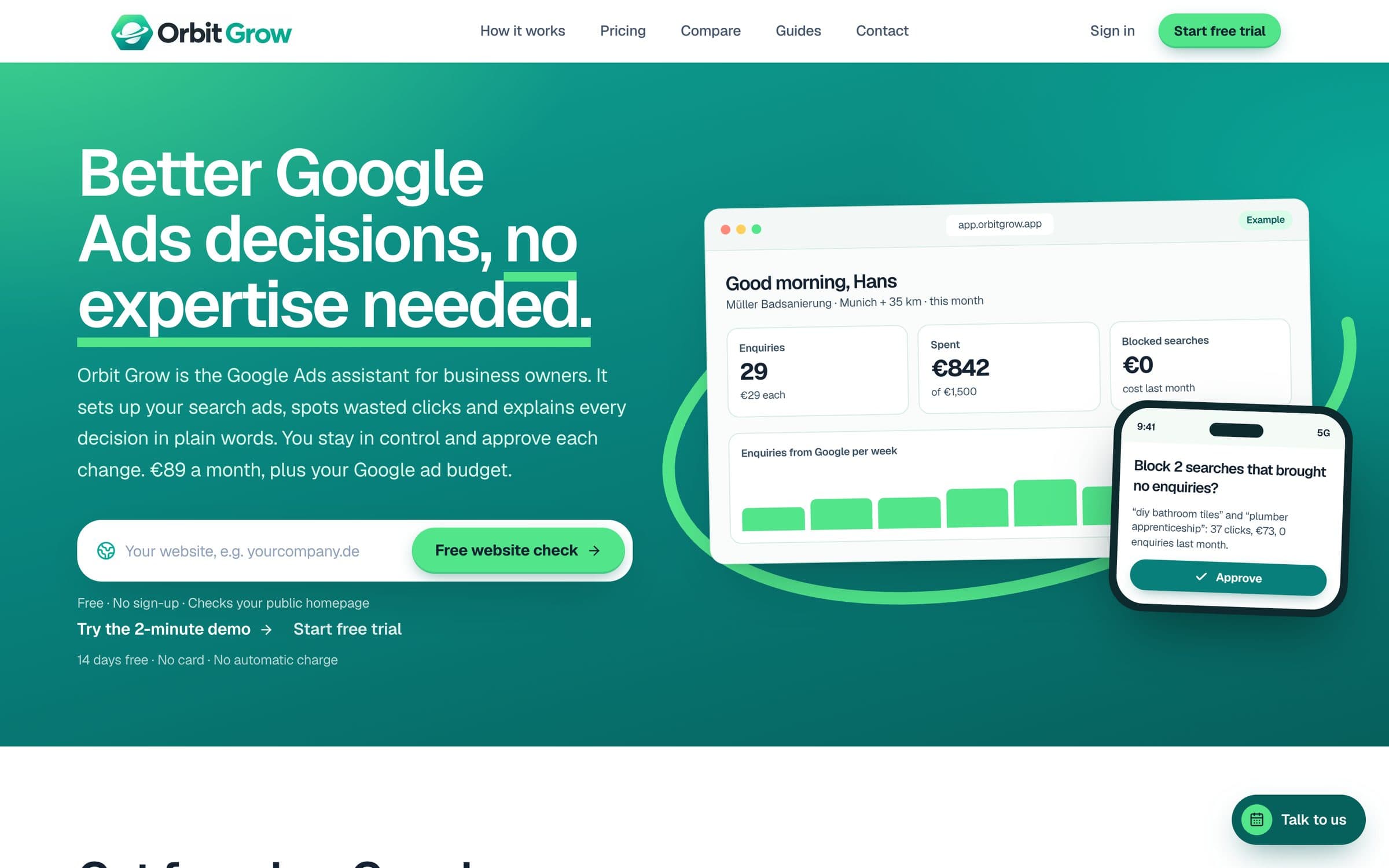
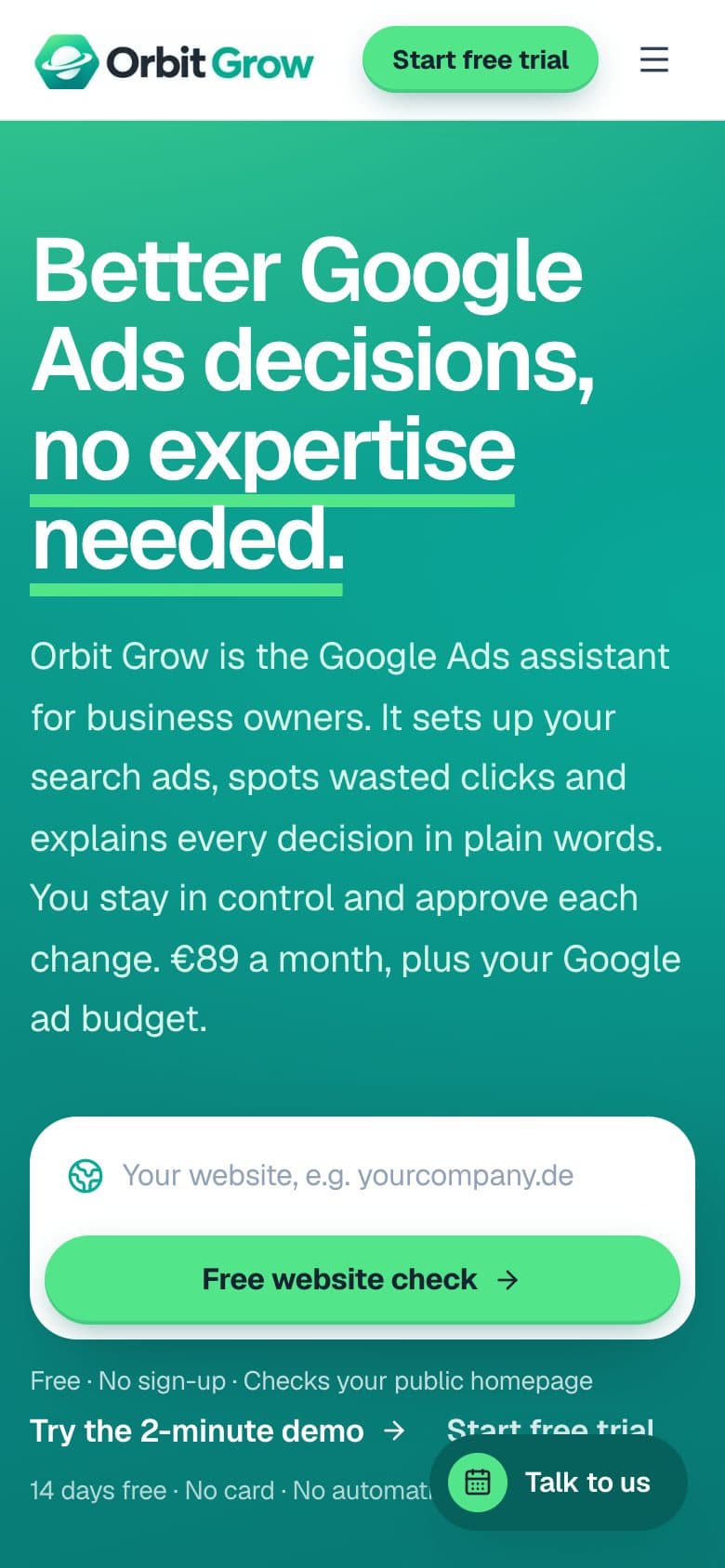
The Google Ads assistant for business owners.
The problem
Owner-run trades and local service businesses spend €500 to €5,000 a month on Google Ads, often through an agency, and still can’t tell which clicks turned into paying jobs.
How it works
- Starts from the services a business actually offers and the area it covers — not from keyword spreadsheets.
- The home screen answers four questions: what happened, why it matters, what to do, and what happens if I approve.
- A weekly routine of about twenty minutes: approve suggestions such as blocking searches that cost money and bring no enquiries.
- Search terms that already bring in customers become factual landing pages for the business’s own website.
- Calls, forms and bookings are tied back to the search that produced them. Every change is explained in plain words, and nothing changes in the ad account without the owner’s approval.
€89 a month plus the Google ad budget. 14 days free, no card; a free website check and a two-minute demo without sign-up.